

Modernity, from its very inception, inaugurated a sense of time, analogy, and difference, considering originality not as an error or a grammatical slip, but as a vector. This vector finds its vital point for the expansion of consciousness and memory in invention and change, which is also reflected in the way things are perceived, in their poetics, and in their aesthetics. Within it, antiquity (no longer seen as old age) and medievality (no longer a loss of technique) took shape. In its various articulations of postmodernity and altermodernity, everything has become subjectively more imperative and objectively truer.
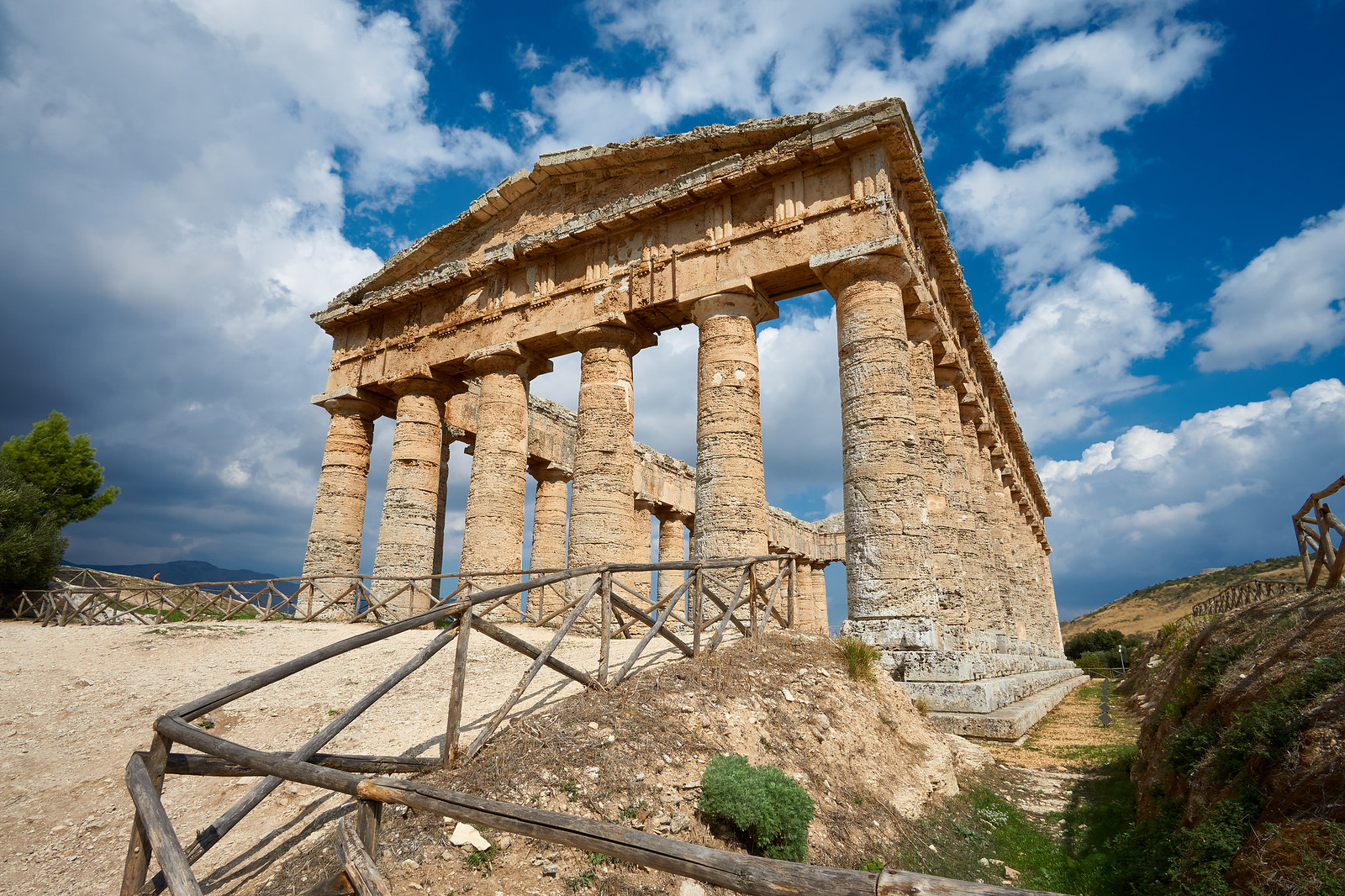
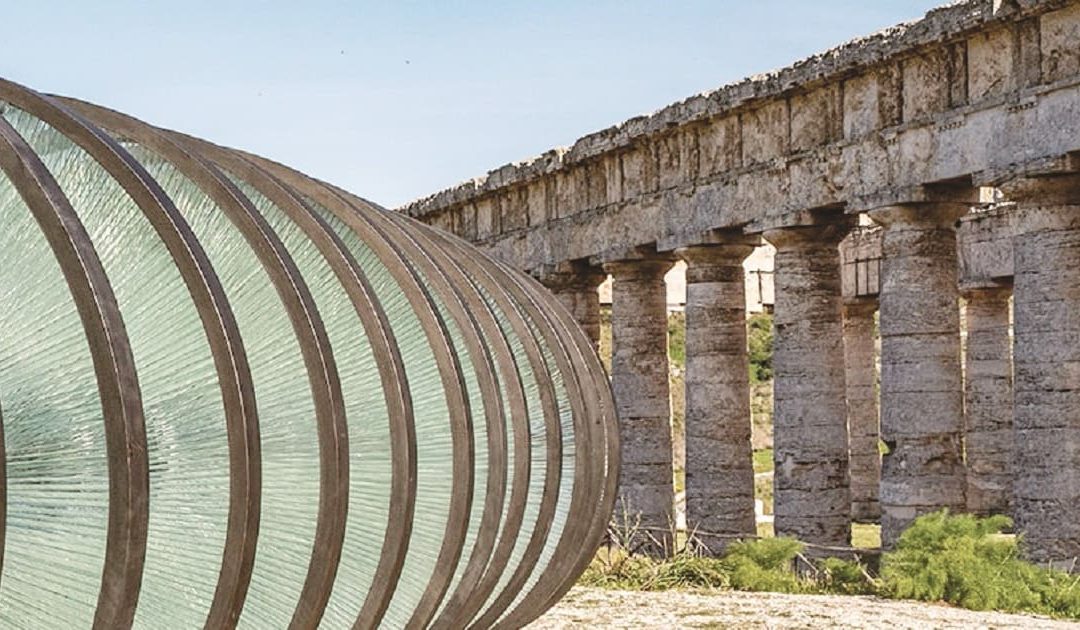
This conceptual premise, in saying that around the Doric temple of Segesta (never finished) and its semi-buried Greek city, the works of three contemporary artists have taken their place, artists who work, in different ways, with materials that are “poor” from the point of view of traditional decorativeness, but rich from a conceptual one, embodying the desire to be in time, but not to be prisoners, with a sophisticated and accurate search for methods and forms, capable of transcending chronological temporality (which is that of biology and biography) and entering into the deep spirit of contemporaneity, which is timeless, capable in space of conjugating the factuality of millennia, establishing an “impossible” dialogue, but for this very reason creative, synthetic, without affecting the’one that comes from afar and the’other that comes from nearby, establishing a community of new myth and new ritual. Thus the installations of Costas Varotsos, with a long optical serpent that alchemically connects the hic et nunc, with the nunc et semper, of Mario Merz who, arm in arm with Fibonacci, proposes the harmony of one and all, as a Pythagorean upheaval of the universe, of Ignazio Mortellaro whose watchtower captures the musicality of the air, in the breath of the wind and gives rise to an uncomfortable, immense sound by Gianni Gebbia. Cheers!
KLESSIDRA | EDITED BY FRANCESCO GALLO MAZZEO
 Italiano
  English (UK)