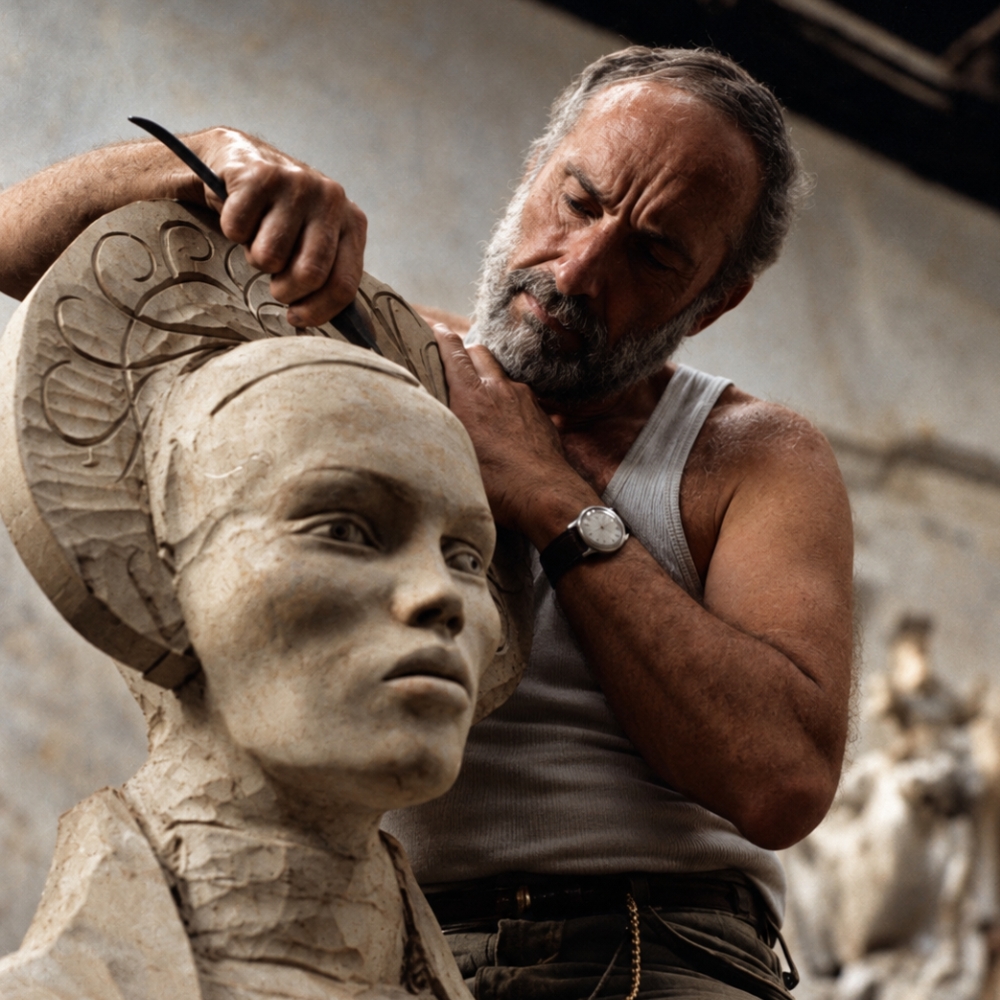
Ugo Attardi (Sori, 1923 – Rome, 2006) was a painter, sculptor, engraver and writer, a protagonist of one of the most original artistic research in the Italian landscape of the second half of the twentieth century. Born in Liguria to Sicilian parents, he moved to Palermo at a very young age, where he began his artistic studies and developed a deep relationship with the culture and imagination of Sicily. In 1945 he arrived in Rome, where he came into contact with the artistic and intellectual environment of the capital and with figures such as Renato Guttuso and Pietro Consagra. In 1947 he was among the founders of Forma 1, a movement destined to mark the history of Italian abstract art of the post-war period, along with, among others, Carla Accardi, Piero Dorazio, Achille Perilli and Giulio Turcato. Starting in the early 1950s, Attardi gradually shifted his research towards an intensely expressive figurative style, developing an autonomous, restless and deeply linked to the human condition language. Painting is combined with engraving, writing and, from the late 1960s, sculpture, an area in which he develops a personal interpretation of figure and myth. His exhibition activities extend from the main Italian institutions to the international scene, with appearances at the Venice Biennale and the Rome Quadrennial, and exhibitions in cities such as Paris, New York, Washington and Buenos Aires. Throughout his career he has received important institutional awards, including the Gold Medal for high artistic value and, in 2006, the title of Grand Officer of the Italian Republic.


 Italiano
 English (UK)